
If you spend any amount of time in the online marketing world, you will hear people obsess over traffic.
More traffic.
More clicks.
More eyeballs.
More visitors.
It gets talked about almost like traffic is some magical scoreboard where bigger numbers automatically mean more success.
But here is the problem…
Most marketers are thinking about traffic completely wrong.
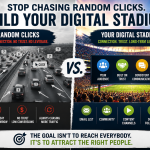
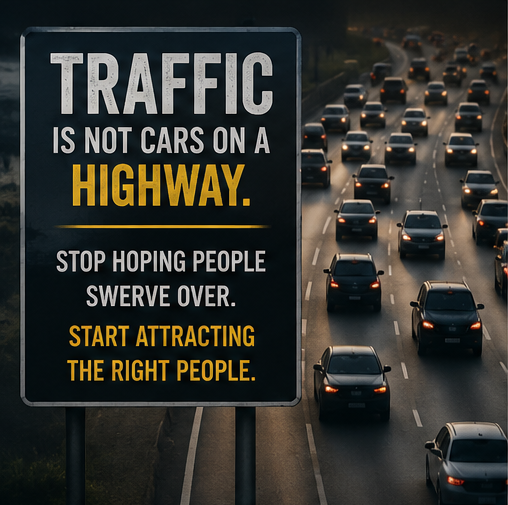
They picture internet traffic like cars flying down a highway.
The goal then becomes:
- throw up a flashy billboard,
- grab attention,
- and hope enough people suddenly swerve over to your page and buy something.
Sounds logical at first.
But honestly?
That mindset is one of the biggest reasons people struggle online.
Because traffic is not cars.
Traffic is people.
Real people.
People with problems.
People with frustrations.
People looking for answers.
People tired of hype.
People trying to figure out who they can actually trust online.
And when you start seeing traffic that way, your entire approach to marketing changes.
The “Highway Traffic” Problem
A lot of marketing today is built around interruption.
Interrupt people long enough to:
- get a click,
- get an opt-in,
- or get a quick sale.
That is why so many ads online feel loud, pushy, or desperate.
Everybody is fighting for attention.
But attention alone is not the goal.
Because a random click means almost nothing if the person clicking:
- does not trust you,
- is not interested,
- is confused,
- or was never the right audience to begin with.
The internet is full of clicks that never become:
- leads,
- buyers,
- repeat customers,
- or long-term relationships.
That is why chasing traffic numbers alone can become very misleading.
A marketer might brag about getting:
- 10,000 visitors,
- massive reach,
- or tons of clicks…
…but still barely make any sales.
Why?
Because they attracted activity instead of attracting the right people.
A Better Way To Think About Traffic
Instead of thinking about traffic like a highway…
Think about it more like building a gathering place.
A place where people actually want to hear from you.
I like to think of this as building a “digital stadium.”
That stadium could be:
- your email list,
- your blog,
- your Facebook page,
- a YouTube channel,
- a community,
- or anywhere people consistently pay attention to your message.
The power is not just in the size of the audience.
The power comes from:
- relevance,
- trust,
- consistency,
- and permission.
You are no longer trying to interrupt random strangers.
You are building an audience of people who are already interested in what you talk about.
That changes everything.
Because marketing gets much easier when people:
- recognize your name,
- understand your message,
- and know what you stand for.
The Real Goal Is Not More Clicks
This is where a lot of online marketers accidentally go off track.
They focus almost entirely on:
“How do I get more traffic?”
But the better question is:
“How do I attract more qualified people?”
Big difference.
One approach chases numbers.
The other builds a business.
The best marketers understand that before somebody ever clicks a link, they are already making decisions:
- Do I trust this person?
- Does this message sound real?
- Is this actually for me?
- Does this solve a problem I care about?
That is why positioning matters.
That is why useful content matters.
That is why relationship-building matters.
And honestly… that is why so much online hype eventually fails.
Because hype might generate curiosity for a moment…
…but trust is what creates long-term customers.
The Marketers Winning Long-Term Understand This
The marketers building sustainable businesses online are usually not the loudest people.
They are often the ones:
- consistently showing up,
- teaching useful things,
- helping people,
- building audiences,
- and creating trust over time.
They understand something important:
Traffic is not about getting everybody.
It is about attracting the right somebody.
That shift alone can completely change how you market online.
Instead of constantly asking:
“How do I get more clicks?”
Start asking:
“How do I attract the right people and help move them toward the next step?”
That question leads to much better decisions.
And usually…
much better businesses too.